HOW IT WORKS
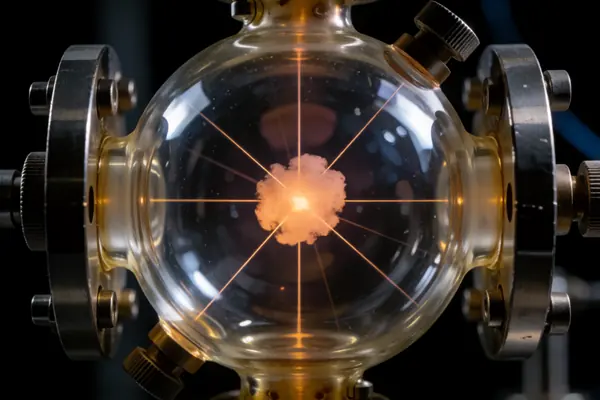
Six beams, one trap
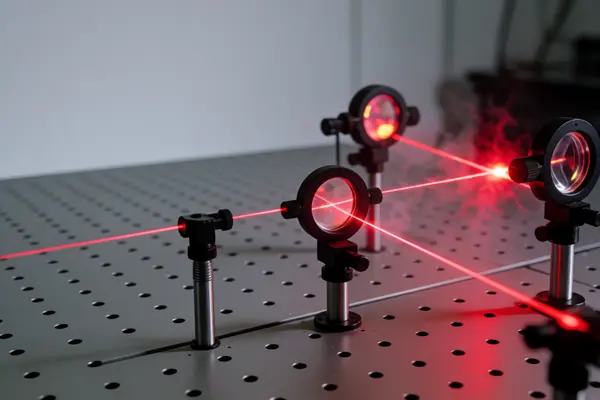
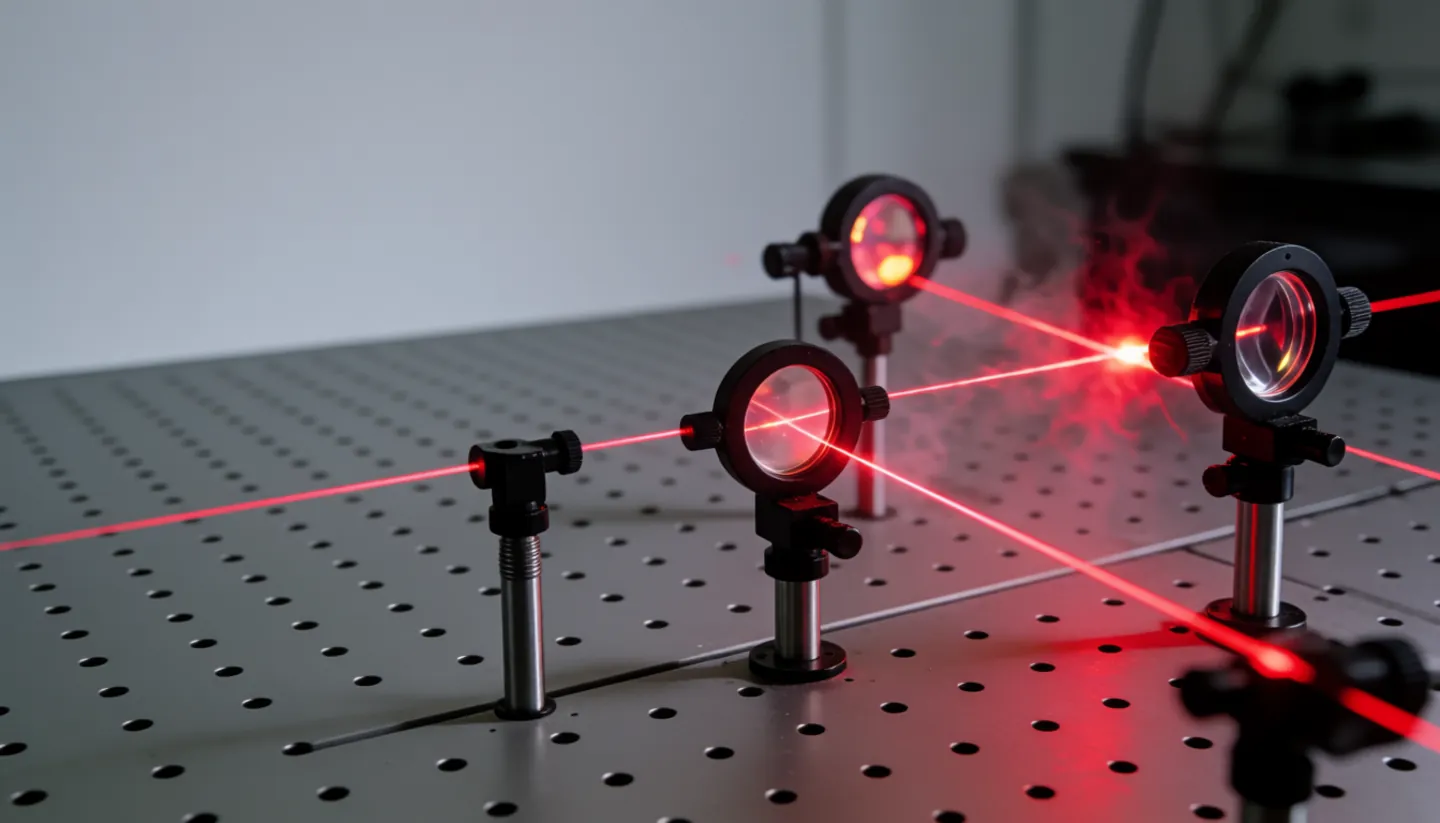
In about 1985 researchers crossed six laser beams tuned slightly below the colour sodium atoms absorb. Atoms moving any direction met photons that pushed them back.
See how cold laserdoodles
LASER COOLING
Tuned just right, laser light can slow atoms almost to a stop.
µK millionths of a degree
≈ 240 µK First optical molasses temperature
At room temperature, the atoms and molecules in air move at about 4,000 km/h. Laser cooling brings atoms to within millionths of a degree of absolute zero, and the UK's most accurate clocks rely on it.
THE SHORT ANSWER
A photon carries momentum, like a curling stone.
Absorbing one head-on slows an atom a little; millions of times over, a lot.
HOW IT WORKS
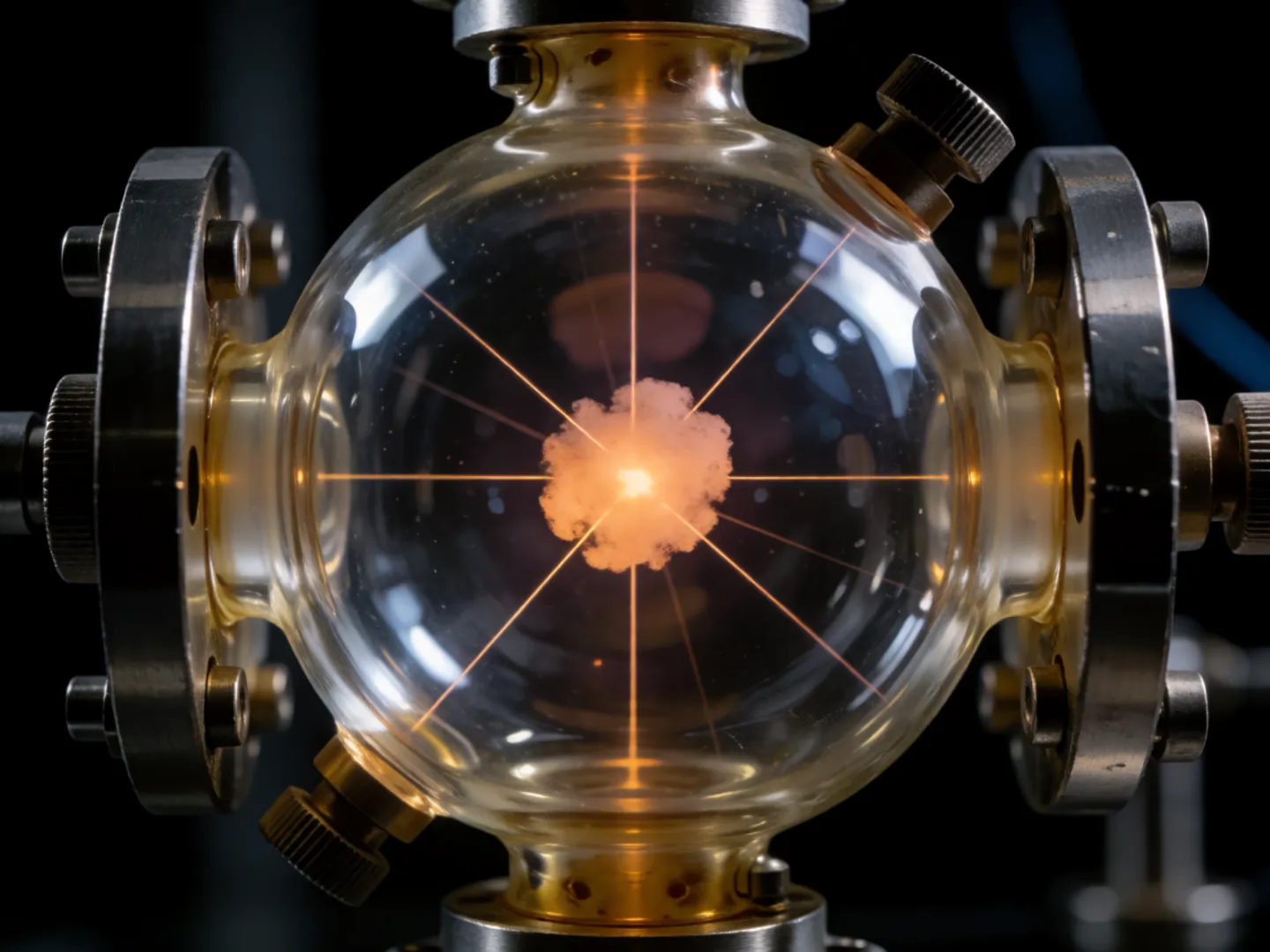
In about 1985 researchers crossed six laser beams tuned slightly below the colour sodium atoms absorb. Atoms moving any direction met photons that pushed them back.
See how coldOPTICAL MOLASSES
Where the beams met, the Nobel committee says, a cloud the size of a pea formed, of about a million chilled atoms, moving as if through thick liquid.
The numbersIN YOUR LIFE
NPL's caesium fountain clocks use laser-cooled atoms to realise the SI second and help set the international time scale, UTC.
Where it reaches youA QUICK TEMPERATURE CHECK
Pick a stage to see the temperature and how fast the atoms move. The bar shows how close it is to absolute zero.
Figures from the Royal Swedish Academy of Sciences' 1997 Nobel Prize in Physics press release.
FOUR PLACES IT TOUCHES YOUR DAY
You never see laser-cooled atoms, but NPL says atomic timekeeping underpins technology most of us use daily.

NPL operates the national time scale, UTC(NPL), and the UK's primary frequency standards.
Atomic timekeeping underpins mobile phones and the internet, and helps timestamp financial transactions.
Satellite navigation systems work out location from signals sent by atomic clocks on board the satellites.
NPL is developing optical clocks based on laser-cooled ions and atoms that already beat caesium standards, work expected to lead to a redefinition of the second.
TWO NUMBERS WORTH KNOWING
One figure for the cold,
one for the clocks it makes possible.
≈ 240 µK
First optical molasses temperature
About 240 millionths of a degree above absolute zero, with sodium atoms slowed to about 30 cm/s. Gravity made them fall out of the beams in about a second.
THE COLD · NOBELPRIZE.ORG
< 5 × 10⁻¹⁶
Accuracy of NPL's caesium fountain standard
Letting laser-cooled atoms rise and fall like a fountain gives a long time to measure them, which is why these clocks are so precise.
THE CLOCKS · NPL
NPL says its first operational caesium-beam atomic clock, built in 1955, would gain or lose only one second in three hundred years, and modern atomic clocks can be as much as a million times more accurate.
THE TRICK
An atom only absorbs light of just the right colour. Tune the laser slightly too red and only atoms moving towards the beam see it as the right colour, just as a train's whistle sounds higher as it approaches. Those atoms absorb a photon and slow down.
The atom re-emits a photon about a hundred-millionth of a second later and can then absorb another, so the braking builds up quickly. The 1997 Nobel Prize in Physics recognised these methods to cool and trap atoms with laser light.
Questions
Photons carry momentum. If an atom moving towards a laser absorbs a photon of the right energy, it slows a little. Repeated many times, this can cool a gas to millionths of a degree above absolute zero.
The region where crossing laser beams slow atoms so much that they move as if through thick liquid. The first one held about a million sodium atoms in a cloud the size of a pea.
The first optical molasses reached about 240 µK. Later work reached about 40 µK for sodium and about 2 µK for caesium, according to the Nobel Prize press release.
NPL's caesium fountain clocks use laser-cooled atoms to realise the SI second and contribute to UTC. The Nobel committee also pointed to atom interferometers for very precise gravity measurements.
NPL says optical atomic clocks based on laser-cooled ions and atoms already surpass caesium standards, and this work is expected to lead to a redefinition of the second.
Updated
ABOUT THIS NAME
laserdoodles.com is part of the DoodleSale portfolio. It isn't in an auction right now, but you can ask about leasing it.